Delving into the realm of Ecommerce Growth Strategy for Shopify Businesses, this guide offers a detailed exploration of key strategies and tactics essential for success in the competitive online market. From market research to customer acquisition, this comprehensive overview is sure to provide valuable insights for Shopify store owners looking to boost their business growth.
The subsequent paragraphs will delve deeper into each aspect of the growth strategy, shedding light on crucial elements that can propel Shopify businesses to new heights of success.
Understanding Ecommerce Growth Strategy for Shopify Businesses
An ecommerce growth strategy for Shopify businesses refers to a comprehensive plan designed to boost sales, increase customer engagement, and expand market reach within the Shopify platform. It involves strategic planning and execution of initiatives to drive sustainable growth and profitability.
Importance of a Well-Defined Growth Strategy
A well-defined growth strategy is crucial for ecommerce businesses on Shopify as it provides a roadmap for achieving business objectives and staying competitive in the market. It helps businesses identify opportunities, mitigate risks, and optimize resources for maximum impact.
Key Components of an Effective Ecommerce Growth Strategy
- Market Research and Analysis: Conduct thorough research to understand the target market, customer preferences, and industry trends.
- Customer Acquisition and Retention: Develop strategies to attract new customers and retain existing ones through personalized marketing campaigns and excellent customer service.
- Optimized Website Design and User Experience: Ensure that your Shopify website is user-friendly, visually appealing, and optimized for conversions.
- Content Marketing and : Create high-quality content to drive organic traffic and improve search engine rankings for increased visibility.
- Social Media Marketing: Leverage social media platforms to engage with customers, build brand awareness, and drive traffic to your Shopify store.
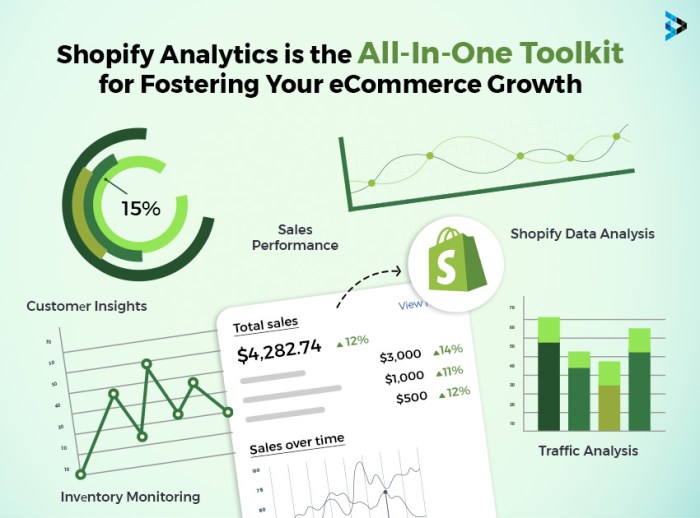
- Performance Monitoring and Analytics: Track key performance indicators (KPIs) to measure the effectiveness of your growth strategy and make data-driven decisions for continuous improvement.
Market Research and Analysis
Market research is crucial for developing a successful ecommerce growth strategy on Shopify. By conducting thorough market analysis, businesses can gain valuable insights into market trends, customer behavior, and competition, which can help in making informed decisions to drive growth.
Tools and Methods for Market Analysis
- Google Analytics: A powerful tool to track website traffic, user behavior, and conversions.
- Social Media Insights: Platforms like Facebook and Instagram provide valuable data on customer demographics and preferences.
- Competitor Analysis: Tools like SEMrush or Ahrefs can help in analyzing competitor strategies and performance.
- Surveys and Feedback: Collecting feedback from customers can provide direct insights into their needs and preferences.
Influencing Decision-Making
Market analysis findings play a key role in influencing decision-making when formulating growth strategies for Shopify stores. By understanding market trends, customer preferences, and competitive landscape, businesses can tailor their offerings, marketing strategies, and pricing to meet the demands of their target audience effectively.
This data-driven approach can lead to better decision-making and ultimately drive growth for Shopify businesses.
Product and Inventory Management
Effective product and inventory management is crucial for the success of any Shopify business. By optimizing product listings and managing inventory efficiently, businesses can improve customer satisfaction, increase sales, and drive growth. Let’s explore some strategies to achieve this.
Importance of Product Differentiation
Product differentiation is essential for standing out in a crowded market and attracting customers to your Shopify store. Here are some key points to consider:
- Identify your unique selling points (USPs) and emphasize them in your product listings to highlight why customers should choose your products over competitors.
- Create compelling product descriptions and high-quality images to showcase the value and benefits of your products.
- Offer a diverse range of products to cater to different customer needs and preferences, providing options for various segments of your target audience.
Leveraging Shopify Features for Product Management and Inventory Control
Shopify offers a range of features to help businesses streamline product management and inventory control. Here are some tips to leverage these features effectively:
- Utilize Shopify’s product variants to offer different options such as sizes, colors, and styles without cluttering your product listings.
- Set up automatic inventory tracking to prevent overselling and manage stock levels efficiently.
- Use Shopify’s built-in analytics tools to track product performance, identify top-selling products, and make data-driven decisions to optimize your inventory.
Customer Acquisition and Retention
Customer acquisition and retention are key components of a successful ecommerce growth strategy for Shopify businesses. By effectively attracting new customers and keeping existing ones engaged, businesses can drive growth and ensure long-term sustainability in the competitive online marketplace.
Customer Acquisition Strategies
Customer acquisition is the process of gaining new customers for your Shopify store. Here are some effective strategies that businesses can implement to drive growth:
- Search Engine Optimization (): Optimizing your website for search engines can help attract organic traffic and improve your visibility online.
- Content Marketing: Creating valuable and relevant content can attract potential customers and establish your brand as an authority in your industry.
- Social Media Advertising: Leveraging social media platforms to target specific audiences and drive traffic to your Shopify store.
- Influencer Partnerships: Collaborating with influencers who have a strong following can help expand your reach and attract new customers.
Customer Retention and Engagement
Customer retention involves keeping existing customers satisfied and engaged to encourage repeat purchases and build loyalty. Here are some tactics that Shopify businesses can use to enhance customer retention:
- Personalized Email Marketing: Sending targeted and personalized emails based on customer behavior and preferences can help nurture relationships and encourage repeat purchases.
- Reward Programs: Implementing loyalty programs and offering rewards for repeat purchases can incentivize customers to continue shopping with your store.
- Excellent Customer Service: Providing exceptional customer service can help build trust and loyalty with customers, leading to long-term relationships.
- Engaging Content: Creating engaging content such as blog posts, videos, or social media posts can keep customers interested and connected to your brand.
Conversion Rate Optimization
Conversion Rate Optimization (CRO) is the process of improving the percentage of website visitors who take a desired action, such as making a purchase, signing up for a newsletter, or requesting more information. It is a crucial aspect of boosting sales and revenue for Shopify businesses by maximizing the effectiveness of their online presence.
Optimizing Website Design
Optimizing the design of your Shopify store is essential for increasing conversion rates. Ensure your website is visually appealing, easy to navigate, and mobile-responsive. Utilize high-quality images and clear product descriptions to engage visitors and encourage them to make a purchase.
Optimizing Product Pages
Product pages play a significant role in converting visitors into customers. Optimize your product pages by including compelling product titles, detailed descriptions, and high-resolution images. Use customer reviews and ratings to build trust and credibility with potential buyers.
Optimizing Checkout Process
A streamlined and user-friendly checkout process is key to reducing cart abandonment rates and improving conversion rates. Simplify the checkout process by minimizing the number of steps required to complete a purchase, offering guest checkout options, and ensuring secure payment gateways.
Utilizing Data Analytics and A/B Testing
Data analytics and A/B testing are powerful tools for identifying areas of improvement and optimizing conversion rates on Shopify stores. Analyze key metrics such as bounce rate, time on site, and conversion funnels to gain insights into customer behavior. Conduct A/B tests to compare different versions of web pages and determine which design elements or content perform best in driving conversions.
Marketing and Promotions
Effective marketing strategies play a crucial role in the growth of Shopify businesses by helping them promote their products and reach a wider audience. Utilizing various promotional channels can drive traffic to their ecommerce stores and increase sales. Let’s explore some key strategies for marketing and promotions on the Shopify platform.
Social Media Marketing
- Utilize social media platforms like Facebook, Instagram, and Twitter to showcase products, engage with customers, and drive traffic to your Shopify store.
- Create engaging content, run targeted ads, and collaborate with influencers to increase brand visibility and attract new customers.
- Regularly monitor and analyze social media metrics to optimize your marketing efforts and identify trends that resonate with your target audience.
Email Marketing
- Build and grow your email list by offering incentives like discounts or exclusive content to encourage sign-ups.
- Segment your email list based on customer behavior and preferences to deliver personalized and relevant content.
- Create targeted email campaigns for promotions, product launches, and special events to drive conversions and customer loyalty.
Influencer Partnerships
- Collaborate with influencers in your niche to reach a larger audience and leverage their credibility to promote your products.
- Select influencers whose values align with your brand and whose followers match your target demographic for maximum impact.
- Track the performance of influencer partnerships through affiliate links or unique discount codes to measure ROI and determine the effectiveness of the collaboration.
Compelling Promotional Campaigns
- Create time-sensitive offers, exclusive discounts, and limited edition products to create a sense of urgency and drive sales.
- Implement referral programs, loyalty rewards, and personalized discounts to incentivize repeat purchases and increase customer retention.
- Utilize user-generated content, customer reviews, and testimonials to build trust and credibility with potential customers and encourage conversions.
Ending Remarks
In conclusion, mastering the art of Ecommerce Growth Strategy for Shopify Businesses is pivotal for sustained success in the dynamic world of online retail. By implementing the strategies Artikeld in this guide, Shopify store owners can navigate the competitive landscape with confidence and drive significant growth for their businesses.
Key Questions Answered
How can I differentiate my products effectively on Shopify?
To differentiate your products on Shopify, focus on unique selling points, high-quality images, detailed product descriptions, and customer reviews to showcase the value of your offerings.
What are some effective customer retention strategies for Shopify businesses?
Customer retention strategies for Shopify businesses include personalized marketing, loyalty programs, excellent customer service, and engaging content to keep customers coming back.
Why is conversion rate optimization important for Shopify stores?
Conversion rate optimization is crucial for Shopify stores as it helps in maximizing the number of visitors who make a purchase, leading to increased revenue and business growth.


![5 Best eCommerce Marketing Digital Agencies [2024 Edition]](https://legal.goodstats.id/wp-content/uploads/2025/11/Best-E-Commerce-Marketing-Agencies-2048x1024-1-120x86.jpg)