Exploring the realm of Best Dividend ETF Alternatives to JEPI, this introductory passage invites readers into a world of investment opportunities. With a focus on clear and engaging language, this guide promises to provide valuable insights and comparisons for a well-rounded understanding of the topic.
Diving deeper into the realm of dividend ETFs, this guide aims to shed light on the best alternatives to JEPI and their potential benefits for investors looking to diversify their portfolios.
Overview of Dividend ETFs
Dividend ETFs are exchange-traded funds that specifically focus on investing in a portfolio of dividend-paying stocks. The main purpose of Dividend ETFs is to provide investors with a steady stream of income through the dividends distributed by the companies held within the fund.
Key Benefits of Investing in Dividend ETFs
- Stable Income: Dividend ETFs offer a reliable source of income through the dividends paid by the underlying companies.
- Portfolio Diversification: Investing in Dividend ETFs allows for diversification across a range of dividend-paying stocks, reducing risk.
- Potential for Growth: Companies that pay consistent dividends often have strong financials and may offer potential for capital appreciation.
- Inflation Hedge: Dividend payments from companies may help investors hedge against the impact of inflation on their investment returns.
Performance of Dividend ETFs vs. Other ETFs
Dividend ETFs have historically provided competitive returns compared to other types of ETFs, particularly during periods of market volatility. The focus on dividend-paying stocks can offer stability and income generation even in challenging market conditions. Additionally, Dividend ETFs tend to outperform growth-focused ETFs during economic downturns, making them attractive options for income-oriented investors.
Introduction to JEPI
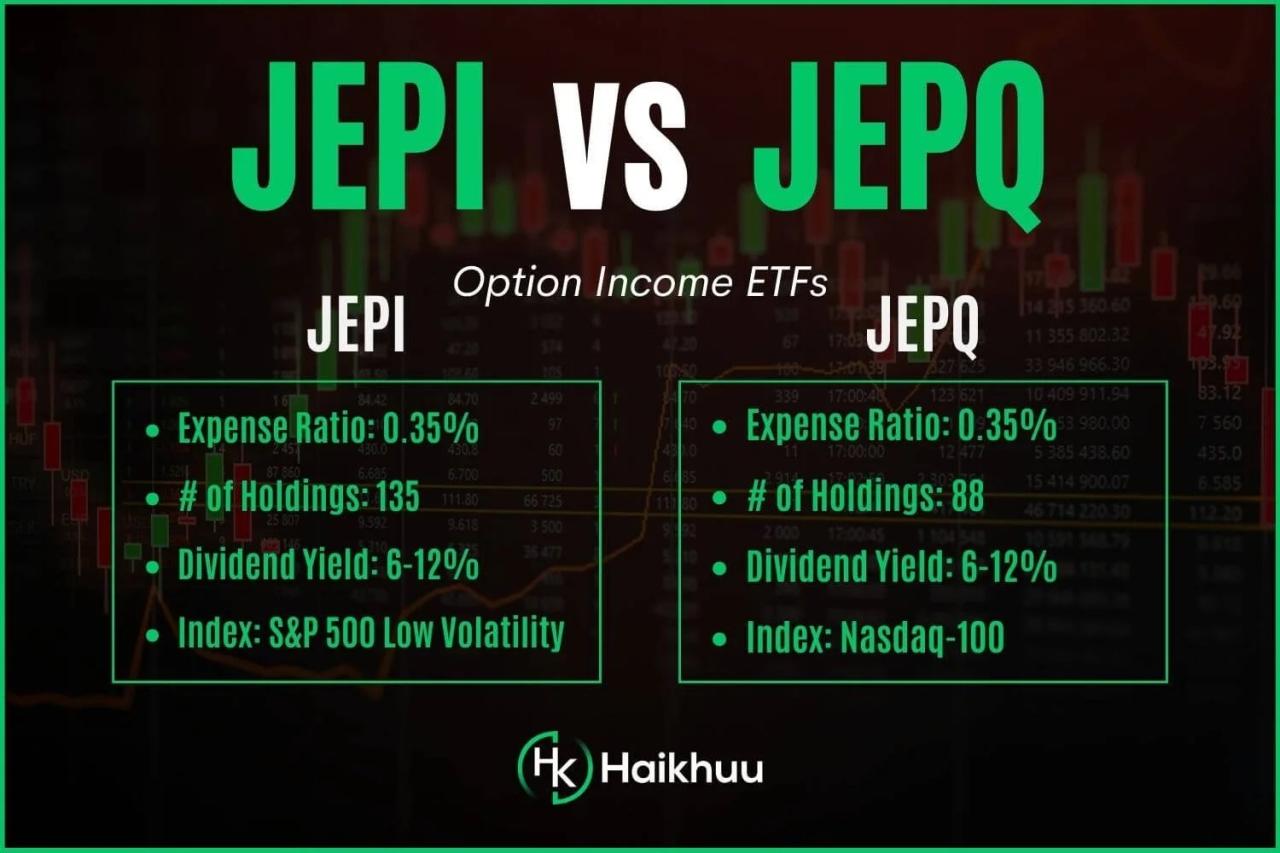
JPMorgan Equity Premium Income ETF (JEPI) is an exchange-traded fund that aims to provide investors with exposure to high-quality U.S. equities while generating income through a covered call strategy.
Investment Strategy and Objectives
JEPI employs a covered call strategy, which involves writing call options on the underlying equities held in the portfolio. This strategy aims to enhance income by collecting premiums from selling call options, while still participating in the potential upside of the stocks.
Historical Performance and Dividend Yield
Over the years, JEPI has delivered a competitive total return and dividend yield compared to traditional equity funds. The fund’s historical performance has shown resilience in various market conditions, making it an attractive option for income-seeking investors.
Alternatives to JEPI
When considering Dividend ETF alternatives to JEPI, investors have several options to choose from based on their investment goals and risk tolerance. It’s essential to compare factors such as expense ratios, historical performance, and dividend yields to make an informed decision.
Top Dividend ETF Alternatives
- VIG (Vanguard Dividend Appreciation ETF):VIG is known for its focus on companies with a history of increasing dividends over time. It has a slightly lower expense ratio compared to JEPI.
- SDY (SPDR S&P Dividend ETF):SDY tracks companies that have a consistent history of increasing dividends. It has a competitive expense ratio and a strong track record of dividend performance.
- DVY (iShares Select Dividend ETF):DVY focuses on high-dividend-yielding companies, making it an attractive option for investors seeking income. Its expense ratio is comparable to JEPI.
Expense Ratios Comparison
When comparing the expense ratios of these Dividend ETF alternatives to JEPI, investors will notice slight variations. VIG typically has the lowest expense ratio, followed by SDY and DVY. It’s important to consider this cost factor when making investment decisions.
Historical Performance and Dividend Yields
Over the years, VIG, SDY, and DVY have shown strong historical performance in terms of dividend yields. Each ETF has its unique approach to selecting dividend-paying companies, resulting in varying yields and growth rates. Investors should analyze past performance data to determine which ETF aligns with their investment objectives.
Diversification and Risk Management
Diversification plays a crucial role when investing in Dividend ETFs as it helps spread out the risk across various assets, reducing the impact of negative performance from a single company or sector. This strategy aims to minimize the overall risk of the investment portfolio while potentially increasing returns.
Importance of Diversification in Dividend ETFs
- Diversification helps investors avoid putting all their eggs in one basket, reducing the impact of a single stock’s poor performance on the overall portfolio.
- By investing in a mix of dividend-paying companies across different sectors and industries, investors can benefit from varying economic conditions and market cycles.
- It provides a level of protection against market volatility and unexpected events that may impact specific companies or sectors.
Examples of Risk Management with Dividend ETFs
- Dividend ETFs typically hold a basket of dividend-paying stocks, reducing the risk associated with investing in individual companies.
- Some Dividend ETFs may focus on companies with a history of consistent dividend payments, providing a level of stability and income for investors.
- Reinvesting dividends back into the ETF can help compound returns over time and mitigate the impact of market fluctuations.
Diversification and Risk Management in Alternatives to JEPI
- Alternative Dividend ETFs may have different diversification strategies, such as focusing on specific sectors, market capitalizations, or geographic regions.
- Some alternatives may offer higher dividend yields but come with increased risk due to a concentrated portfolio or exposure to specific industries.
- Investors should carefully assess the diversification and risk management strategies of alternative Dividend ETFs to align with their investment goals and risk tolerance.
Sector and Industry Focus

When considering Dividend ETF alternatives to JEPI, it’s important to look at whether these options have a specific focus on certain sectors or industries. This can have significant implications for your portfolio performance and overall diversification strategy.
Sector-specific Dividend ETFs
Sector-specific Dividend ETFs concentrate on companies within a particular industry, such as technology, healthcare, or energy. While this targeted approach can offer the potential for higher returns if that sector performs well, it also comes with increased risk if the sector underperforms.
Investors need to carefully weigh the potential rewards against the higher level of risk involved.
Diversification Benefits
On the other hand, broad-based Dividend ETFs provide exposure to a wide range of sectors, spreading out risk across different industries. This diversification can help mitigate the impact of a downturn in any single sector on your overall portfolio performance.
While sector-specific ETFs may offer the potential for greater rewards, broad-based ETFs typically offer more stable and consistent returns over the long term.
Final Review
In conclusion, the landscape of Dividend ETF alternatives to JEPI offers a diverse range of options for investors seeking to optimize their investment strategies. By carefully considering factors such as performance, expense ratios, and sector focus, investors can make informed decisions to enhance their portfolios.
Essential FAQs
Do Dividend ETFs guarantee fixed returns?
Dividend ETFs do not guarantee fixed returns as they are subject to market fluctuations and the performance of the underlying assets.
How do expense ratios impact the overall returns of Dividend ETFs?
Lower expense ratios can lead to higher net returns for investors, as fees and expenses directly affect the overall performance of the ETF.
Are sector-specific Dividend ETFs riskier than broad-based ones?
Sector-specific Dividend ETFs can be riskier due to their concentrated exposure to specific industries, which may lead to higher volatility compared to broad-based ETFs.


![5 Best eCommerce Marketing Digital Agencies [2024 Edition]](https://legal.goodstats.id/wp-content/uploads/2025/11/Best-E-Commerce-Marketing-Agencies-2048x1024-1-120x86.jpg)